Tour Description
Groups accepted with a minimum of 6 pax.
Our tour crosses Northern Portugal to end up in Santiago, on the other side of the border, in Galicia, Spain.
From the old town of Porto, a UNESCO World Heritage city, and home of Port wine, to the medieval town of Santiago de Compostela, crossing beautiful regions in Northern Portugal and Galicia, the Portuguese Way of Santiago is an unforgettable journey.
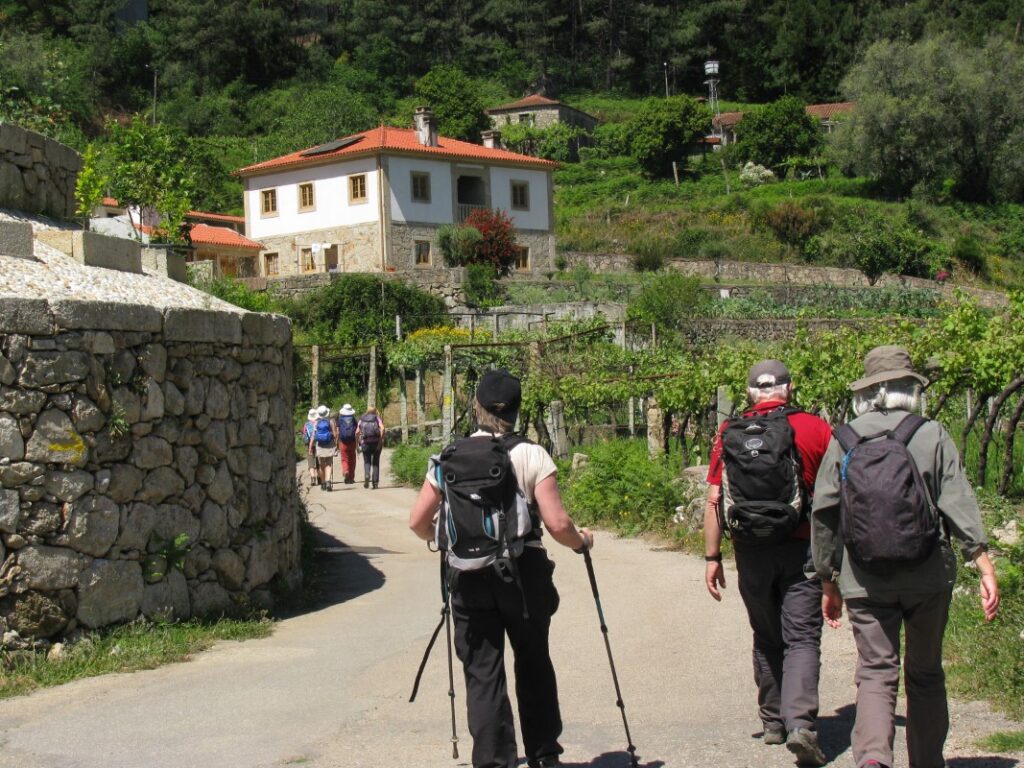
Walking in Minho
With the picturesque riverfront of Porto, the famous ceramics of Barcelos, the green hills of Northern Portugal and Galicia, not to forget the numerous Baroque churches and medieval villages and bridges all along the way, the Portuguese Way has plenty to offer, for all the heritage, culture and nature lovers.
We can’t fail to mention the sumptuous gastronomy from both regions, and the fine wines, among the best in the world.
The Portuguese Way is approximately 241km, we will be cherry-picking the best sections for your enjoyment.
The Portuguese Way to Santiago is a classic route that combines personal challenge, interest in history, art, and nature. Year after year pilgrims cover hundreds of miles through stunning landscapes, hidden isolated villages, and spectacular medieval towns.
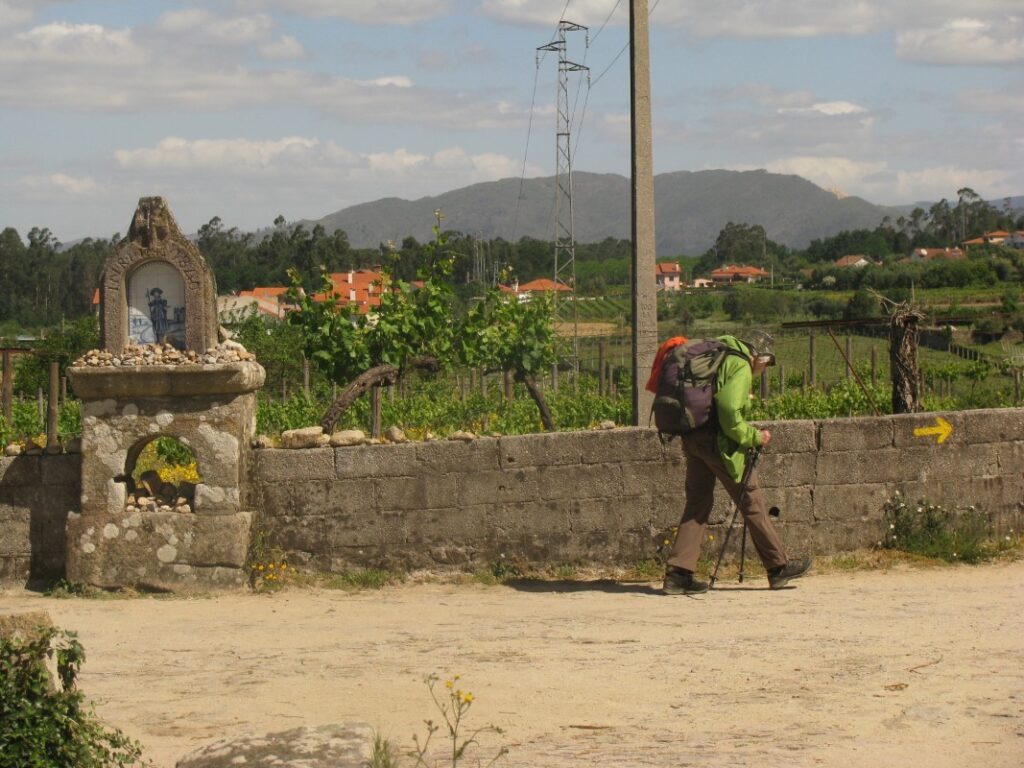
Walking Portuguese Santiago Way
The peregrination to Santiago from Portugal has started in the high medieval period. For centuries, the Portuguese people participated in this collective experience, following the example of monarchs, members of the nobility, and the high clergy.
The hospitality offered by the people is proverbial, and a true highlight. This practice was started in the middle Ages by the monks and clergymen, and the tradition is kept alive today along the Way.
Itinerary
Day 1 – Arrival
Arrive at Porto airport and transfer to hotel. If time allows an introductory walk will be offered.
Day 2 – Rates to Carvalhal
Our journey starts amidst rural lands mixed with woodland towards the impressive city of Barcelos, where you’ll discover the origins of the country’s famous symbol, the cockerel, a symbol of good luck.
Located on the right bank of the Cávado River, Barcelos combines medieval structures with baroque constructions. It preserves an important historical center, dominated by the Paço dos Duques, the main church, Igreja Matriz, and the Manor House, Solar dos Pinheiros.
Day 3 – Vitorino dos Piães to Ponte de Lima
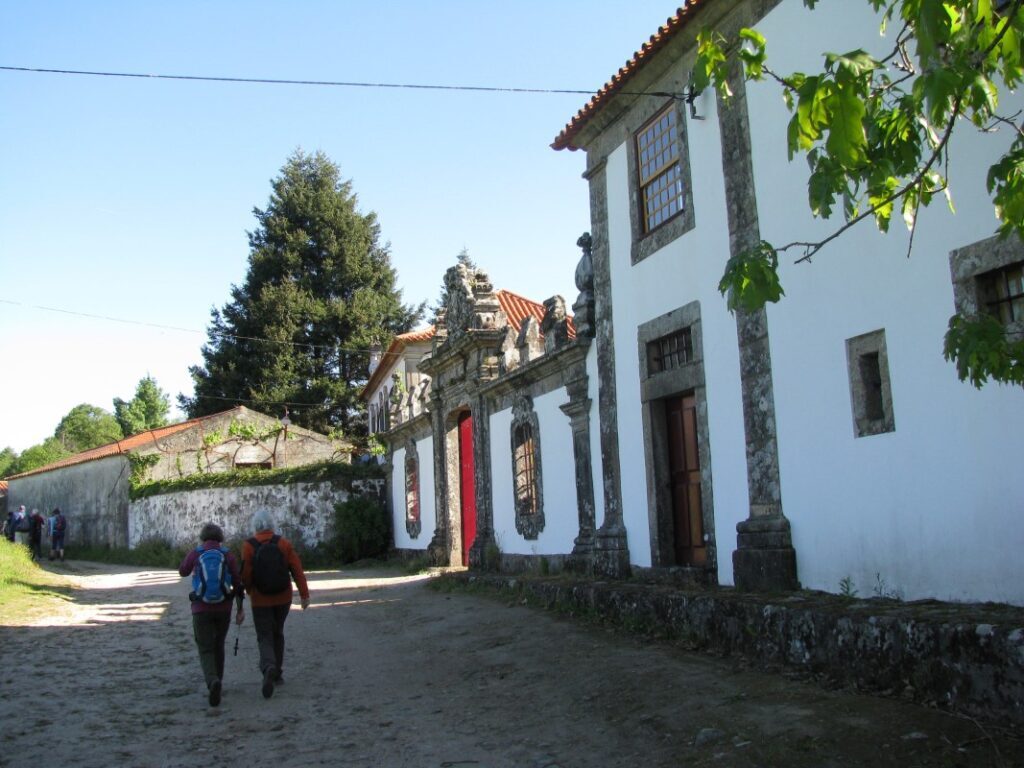
A lovely stretch in the center of a rich farming region, where the famous Vinho Verde (semi-sparkling young wine) is produced. The attractive rural area around has the largest concentration of baroque manors in Portugal.
The Roman Bridge gave its name to this very ancient and very beautiful town. One of the oldest towns in Portugal, Ponte de Lima was historically significant as a Roman settlement in the road from Braga to Santiago de Compostela.
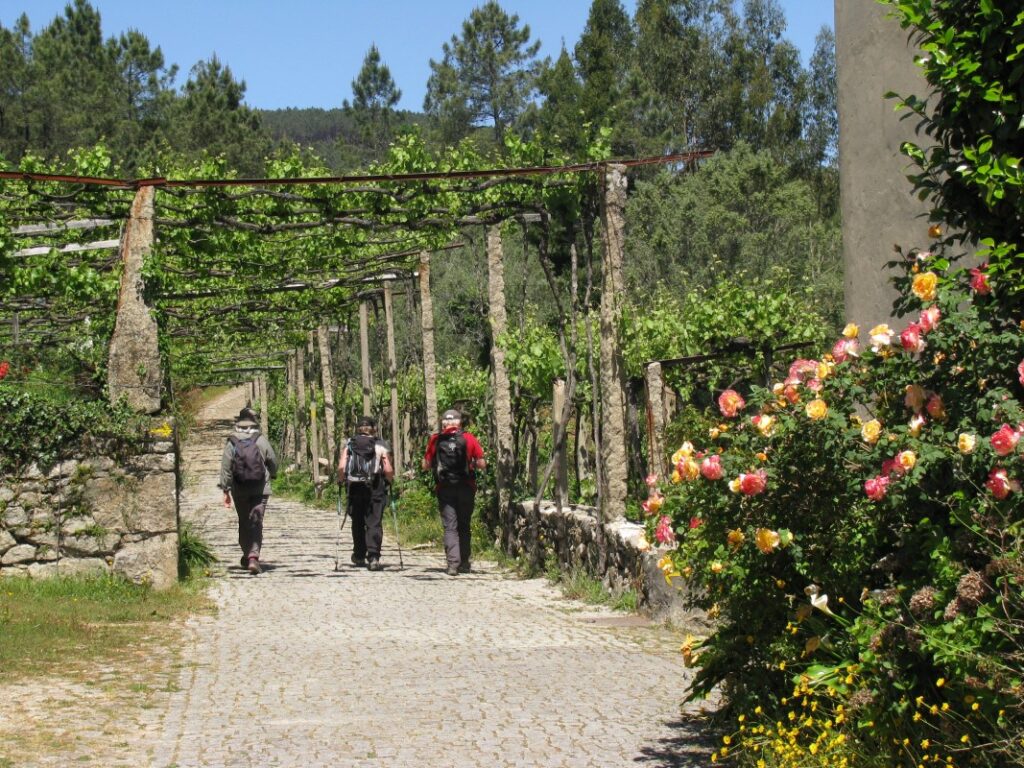
Portuguese Santiago Way
Day 4 – Ponte de Lima to Aqualonga
This very pleasant walk leaves the fertile valley of the river Lima and climbs the final range of wooded hills before Galicia.
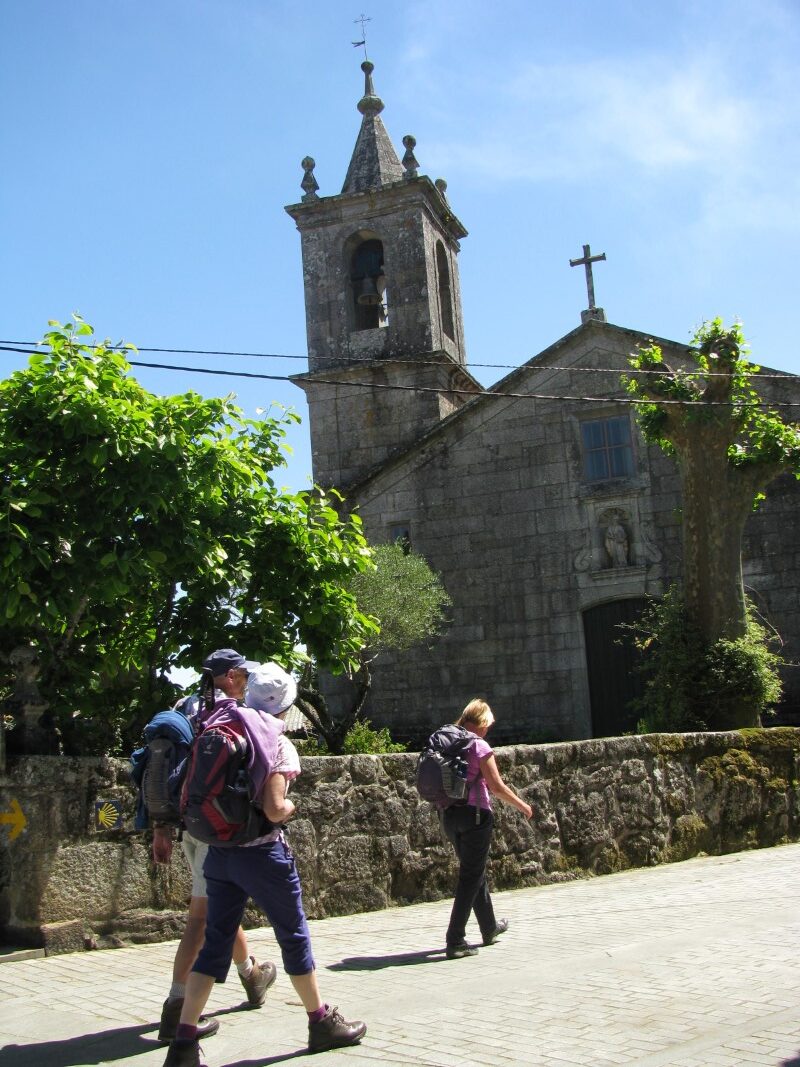
Portuguese Santiago Way
Day 5 – Valença to Porriño (Os Eidos)
In Valença we will detour through the old town before crossing into Spain on the iron bridge over the River Minho (in old times, pilgrims used to cross the River by boat). In Tui, on the opposite bank of the river, we will pass by the Cathedral at the heart of the old town.
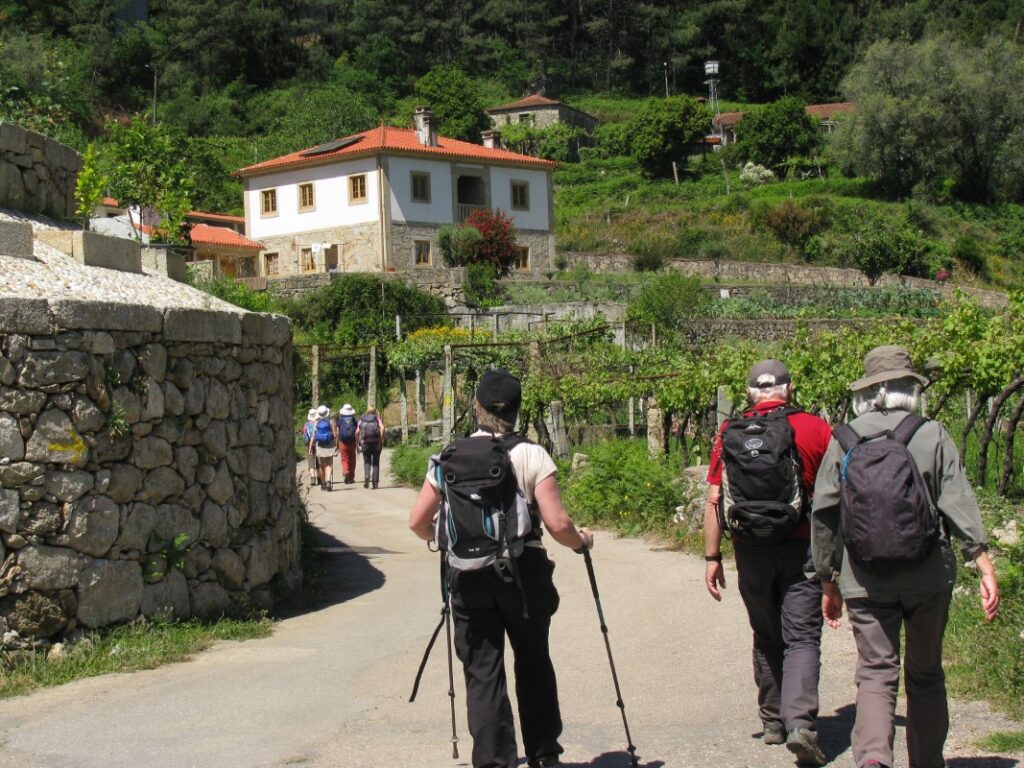
We’ll then take a lovely bucolic path towards Porriño, through pleasant countryside and small villages.
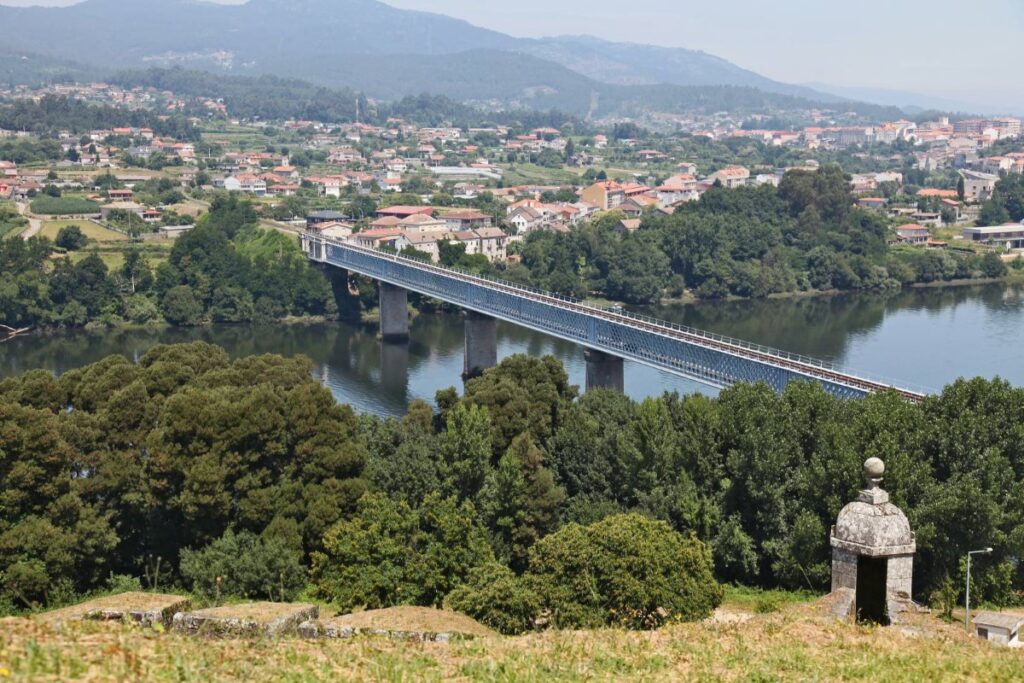
Valença Portuguese Santiago Way
Day 6 – Caldas dos Reis to Padrón
We leave Caldas dos Reis along some captivating stretches of the Way, along two beautiful river valleys through which the Bermaña and the Valga rivers flow, following paths through forests and meadows.
After crossing the Ulla River we arrive at Padrón. According to legend, this is the place where the boat carrying the body of the Apostle Santiago arrived from Jerusalem.
Portuguese Santiago Way
Day 7 – Santiago de Compostela
Today, we reach our goal, the holy city of Santiago de Compostela. Legend holds that St. James’s remains were carried here for burial after arriving at Padrón by boat from Jerusalem.
This is a magnificent medieval city, focused on the Plaza do Obradoiro, bordered by the Cathedral and the City Hall and the Parador (The Hostal de Los Reyes Catolicos served as a hospice and a hospital, where pilgrims could recover and rejuvenate after completing the pilgrimage.
Streets around Plaza do Obradoiro contain bars, shops, and restaurants, and the pilgrims’ office, where hikers are issued a certificate as proof of arrival in the city of Santiago. In medieval times the end of the pilgrimage was marked by the presentation of a scallop shell, which today is the symbol of Santiago’s Way.

Santiago_Compostela – the legend of St. James and the value of the “pilgrimage”
Day 8 – Departure
After breakfast transfer to Porto airport.
Insurance
You must be adequately insured to join our Guided holidays walking and Self-Guided holidays in Portugal. We do not insist that you insure with us but we require that you are adequately insured for the nature of your holiday.
BeCool Travel has partnered with WorldNomads.com to keep you traveling safely. WorldNomads.com Travel Insurance is designed for independent and adventurous travelers, with coverage for overseas medical expenses, cancellation, baggage, and other expenses.
Please consult our Travel Insurance page, where you’ll be able to get more detailed info about insurance requirements and an immediate quote for your trip.















 English
  Portuguese
  German
  French
  Dutch
Dutch  Swedish